Abstract
As one of the most abundant materials in the world, calcium carbonate, CaCO3, is the main constituent of the skeletons and shells of various marine organisms. It is used in the cement industry and plays a crucial role in the global carbon cycle and formation of sedimentary rocks. For more than a century, only three polymorphs of pure CaCO3—calcite, aragonite, and vaterite—were known to exist at ambient conditions, as well as two hydrated crystal phases, monohydrocalcite (CaCO3·1H2O) and ikaite (CaCO3·6H2O). While investigating the role of magnesium ions in crystallization pathways of amorphous calcium carbonate, we unexpectedly discovered an unknown crystalline phase, hemihydrate CaCO3·½H2O, with monoclinic structure. This discovery may have important implications in biomineralization, geology, and industrial processes based on hydration of CaCO3.

Zhaoyong Zou
Professor
My research interests include bioprocess inspired fabrication, crystallization and ceramics.
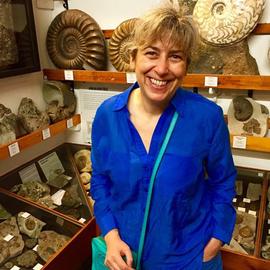
Pupa U. P. A. Gilbert
Professor of Physics, University of Wisconsin–Madison
Professor of Physics at the University of Wisconsin–Madison, a leading scholar in biomineralization and a pioneer of synchrotron spectromicroscopy (PEEM, PIC mapping).

Peter Fratzl
Professor at Max Planck Institute of Colloids and Interfaces, Member of the German National Academy of Sciences Leopoldina
Director of the Department of Biomaterials at the Max Planck Institute of Colloids and Interfaces, a leading scholar in biological and bio-inspired materials science, studying the relationship between hierarchical structure and physical properties of natural materials such as bone, wood, and mollusk shells.